The Button That Made You Care: What Streaming Stole When It Killed the Rewind
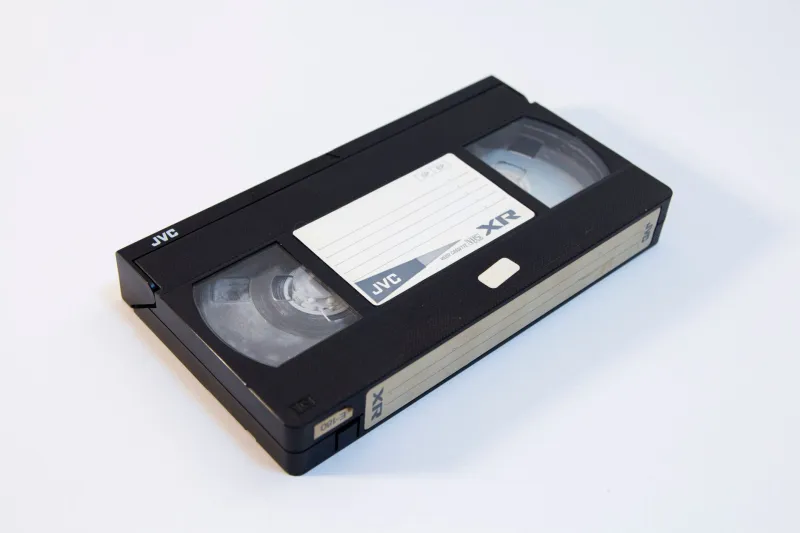
There's a specific sound that anyone who grew up in the eighties or nineties carries somewhere in their muscle memory. That high-pitched mechanical whir of a VCR rewinding—the tape spooling back with a kind of urgency, like it was in a hurry to get somewhere important. You'd stand there in front of the TV, or wander to the kitchen to grab a snack, and when the clunk of the stop mechanism fired, you knew the tape was ready. The movie was yours again, from the beginning, if you wanted it.
Most of us didn't think much about that ritual at the time. It was just a thing you did. But looking back, that small mechanical act turns out to have shaped something bigger than we realized—the way we paid attention, the way we remembered, and the way we decided what was worth watching twice.
The Cost of Going Back
Here's the thing about rewinding a tape: it cost you something. Not money, but time and a little bit of effort. If you wanted to see that scene again—the one with the perfect line, the twist you didn't catch the first time, the moment that made your stomach drop—you had to commit to it. You had to hit rewind, wait, and then fast-forward back to roughly the right spot, overshooting and backing up until you landed somewhere close.
That friction wasn't accidental, and it wasn't neutral. It meant that every time you went back to rewatch something, you made a conscious choice. You decided that moment was worth the hassle. And because of that, the things you rewound tended to stick. You weren't passively scrolling back through content—you were making a small investment in a memory.
Compare that to streaming. Today, going back ten seconds costs you nothing. Netflix, Hulu, HBO Max—they all let you scrub through a timeline with zero resistance. Which sounds like a pure improvement. Faster, easier, more convenient. But convenience has a way of quietly draining meaning out of things.
When everything is frictionless, nothing feels deliberate.
Repeated Viewing as a Different Kind of Watching
VHS collectors tend to talk about their tapes the way readers talk about favorite books—with a familiarity that goes beyond plot summary. They know the pacing. They know where the score swells. They know which scenes drag and which ones hit harder every single time. That's not just nostalgia. That's what happens when you watch something repeatedly, with enough space between viewings to actually let it settle.
The rewind was part of that ecosystem. Because rewatching a VHS tape required some effort, people tended to watch all the way through more often than not. You'd commit to the whole experience rather than jumping around. The tape had a direction—it moved forward, and going backward was the exception, not the default.
Streaming, by contrast, encourages a kind of restless navigation. You can jump to the good parts. You can skip the slow ones. You can watch the climax without sitting through the setup. And while that feels like freedom, it also means you never fully inhabit the movie. You're sampling it rather than experiencing it.
There's actual research to back this up. Studies on learning and memory consistently show that effortful retrieval—working a little harder to access something—strengthens retention. The slight inconvenience of rewinding a tape, annoying as it was, may have been making us better, more engaged viewers without us ever knowing it.
What the Be Kind Rewind Culture Was Really About
Remember the rental store policy that became a cultural shorthand? Be kind, rewind. It was plastered on stickers inside tape cases and on signs above the return slots at every Blockbuster and mom-and-pop video shop in America. On the surface, it was just a courtesy reminder—don't make the next person do your work.
But that little phrase carried something else inside it. It acknowledged that the tape had a correct starting position. That there was a proper way to hand something off to someone else. It built a small social contract around media consumption—you received something, you used it, and you left it ready for whoever came next.
Streaming has no equivalent of that. There's no handoff, no consideration of the next viewer, no sense that the media exists in a shared physical space. You finish a show and it just... sits there in a server somewhere, unchanged, waiting for someone else to summon it. The social dimension of the tape—that it had been held by other hands, rewound by other people, watched in other living rooms—is completely gone.
For collectors, that physical lineage is part of what makes a tape meaningful. A well-worn VHS with a cracked case and a label that's been written over twice isn't just a storage medium. It's a record of attention. Someone cared enough to rewind it. Someone cared enough to label it. Someone kept it.
The Pause That Wasn't a Pause
One more thing worth mentioning: the VCR pause button behaved differently than its digital equivalent. On a tape, pausing for too long could actually damage the image—the heads would wear a groove into the tape if you left it frozen too long. Some VCRs would automatically release the pause after a few minutes to protect the tape.
What that meant, practically, was that you couldn't pause indefinitely. You couldn't freeze a movie and walk away for two hours and come back expecting it to be exactly where you left it. The tape pushed back. It had limits. And those limits, again, shaped how you watched. You stayed present because leaving meant losing your place, or worse, damaging the tape.
Digital streaming has no such urgency. You can pause something for a week and return to find it waiting patiently. Which is genuinely convenient. But it also means there's no cost to drifting. No reason to stay in the room. No relationship between your attention and the medium's survival.
Why This Matters Now
None of this is an argument for going back to VHS as your primary viewing format—though plenty of collectors would happily make that case. It's more of an observation about what we traded away when we optimized media for pure convenience.
The rewind button wasn't just a mechanical function. It was a checkpoint. A small moment of reflection between viewings. It asked you, quietly, whether you really wanted to go back—and if you said yes, it rewarded that decision with a slightly stronger memory, a slightly deeper connection to what you'd watched.
When streaming eliminated that checkpoint, it made watching easier and engagement shallower at the same time. We gained access and lost investment. We got infinite content and lost the ritual that made individual pieces of content feel like they mattered.
For VHS collectors, that's not a theoretical concern. It's the whole reason the tapes still feel worth keeping. Because a tape you've rewound a dozen times is a tape you've chosen, over and over again. And that choice is the whole point.