Somebody Recorded Over That: The Strange, Sad Science of Mystery Tapes
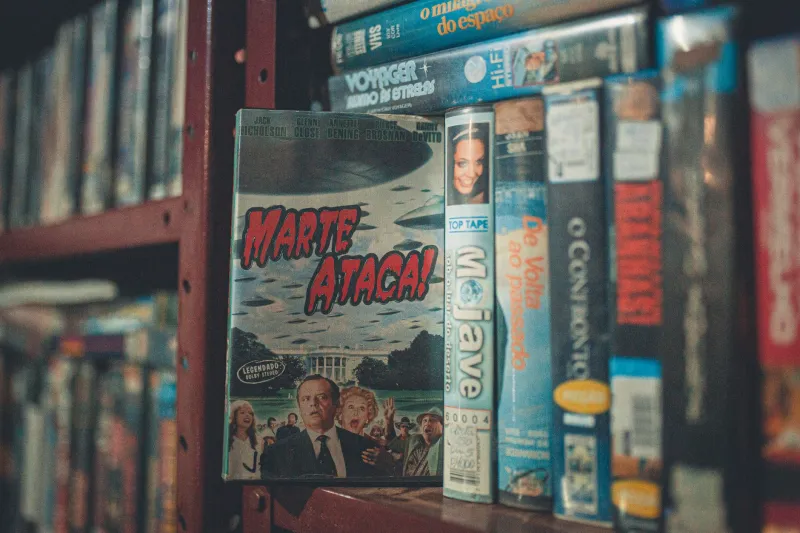
Pop a mystery tape into a working VCR and you never quite know what you're going to get. Maybe it's thirty seconds of a Thanksgiving dinner, then static, then a local car dealership ad from 1991, then someone's kid blowing out birthday candles. Maybe it's an entire Dateline episode with a chunk of a backyard barbecue spliced in somewhere around the forty-minute mark. Maybe it's just snow — pure, unbroken static — with a faint audio ghost underneath that might be a laugh track or might be the wind.
These tapes exist in the tens of millions. They're in thrift store bins, estate sale boxes, and the back corners of storage units across the country. And for a certain kind of collector, they're the most interesting thing in the room.
Why So Many Tapes Ended Up This Way
To understand the mystery tape phenomenon, you have to understand how most American families actually used VHS. They didn't treat tapes like archival media. They treated them like scratch paper.
A blank T-120 cost a few bucks. It held six hours in EP mode. So you'd record a movie off HBO, watch it once, and then maybe tape over it with something else six months later. Or your kid would grab it off the shelf without looking. Or you'd run out of blank tapes during the Super Bowl and grab whatever was closest. The result was a culture of casual, layered recording that nobody was keeping track of — because why would you? You were just watching TV.
The label on the spine, if there was one, might say Die Hard in faded marker. But underneath that recording there's a 1994 Christmas morning, partially intact, running for about eleven minutes before the movie kicks in. Somebody needed a tape. They grabbed one. They didn't check what was on it first.
This happened constantly. It happened in virtually every household in America that owned a VCR, which by the mid-1990s was the overwhelming majority of them.
The Palimpsest Problem
Historians use the word palimpsest to describe manuscripts that were scraped clean and written over — but where traces of the original text still bleed through. VHS tapes are magnetic palimpsests. The erase head on a VCR doesn't always do a perfect job. Signal bleeds. Ghosts of old recordings linger underneath new ones, especially when tapes were recorded over dozens of times.
Collectors who specialize in these tapes talk about them in almost archaeological terms. You're not just watching what's on the surface. You're reading layers. A tape that looks blank might have fragments of audio from three different recordings. A tape labeled with one movie might have the remnants of two others living underneath it.
Some of the most interesting finds come from tapes that were partially recorded over. Someone starts taping a news broadcast, stops, and the original content — maybe a home video from years earlier — picks right back up. You get this jarring cut from a talking head anchor to a kid's birthday party, and then back again. No explanation. No transition. Just life, interrupted and resumed.
The Detective Work
For collectors who take this stuff seriously, identifying a mystery tape is a genuine puzzle. The process usually starts with visual clues. What are people wearing? What cars are visible in the background? Are there any brand logos, store signs, or product packaging that can be dated? Local news broadcasts are gold — they often have a date and time burned right into the corner of the screen, and even when they don't, the stories themselves can be cross-referenced.
Audio is another layer entirely. Regional accents can narrow down geography. Background music — especially if it's a radio playing in another room — can sometimes be identified and dated. Even the quality of the tape stock itself offers clues. Certain brands had characteristic degradation patterns. The way color bleeds or audio warps can tell an experienced eye roughly when a tape was manufactured and how it was stored.
Online communities have turned this into a collaborative sport. Forums and social media groups dedicated to VHS preservation regularly post clips from mystery tapes and crowdsource the identification. Someone in Ohio recognizes a local grocery store chain that closed in 1997. Someone else catches a bumper sticker for a political campaign that ran in a specific state. Piece by piece, a tape's origin story gets assembled from fragments.
What Gets Lost When We Record Over Things
There's something genuinely melancholy about the mystery tape, once you sit with it. These fragments exist because somebody decided — consciously or not — that whatever was already on the tape wasn't worth keeping. A birthday party got erased because someone needed to record a football game. A family vacation got taped over for a movie that probably got taped over again later.
We didn't think of home video as history. We thought of it as convenience. The VCR was an appliance, not an archive. And so we treated the tapes accordingly — reusing them, mislabeling them, losing them in moves, leaving them in garages where the heat wrecked the magnetic coating over a decade or two.
What survives is accidental. The mystery tape exists not because anyone intended to preserve it, but because the act of destruction was incomplete. The birthday party is there because whoever grabbed the tape hit record before the whole thing was gone. The news broadcast bleeds into the home video because the timing was slightly off. These are preservation failures that accidentally became preservation successes.
The Tapes Nobody Claimed
One of the stranger subsets of the mystery tape world is what collectors sometimes call the unclaimed tape — footage that appears to be clearly personal, clearly meaningful, and yet completely unidentifiable. A family Christmas that could be from anywhere in the Midwest. A graduation party with no names spoken on camera. A baby's first steps, beautifully recorded, with no context whatsoever.
These tapes ended up at Goodwill or in an estate sale because the people who could have identified them are gone, or moved, or simply don't know the tape exists. The footage is intact. The moment is preserved. But the human thread connecting the image to a name, a family, a place — that's been cut.
Collectors who find these tapes often hold onto them. Not because they have any personal connection to the footage, but because throwing them away feels wrong. There's a person on that tape. There's a moment someone thought was worth recording. Letting it disappear into a landfill feels like a second erasure.
Rewind and Look Again
The mystery tape is, in a lot of ways, the purest expression of what VHS culture actually was. Messy. Layered. Unintentional. A medium that captured life not because we were being careful archivists, but because the record button was right there and something was happening.
The tapes that survived — the ones sitting in bins right now, waiting to be played — are the ones that slipped through the cracks of our own carelessness. And the footage on them, however fragmented or strange, is real. It happened. Someone was there.
All it takes to find it is a working VCR, a little patience, and the willingness to press play on something you don't recognize.