Dubs, Deals, and Dead Drops: Inside the Underground Tape Trading Networks That Pirated Culture Before the Internet Existed
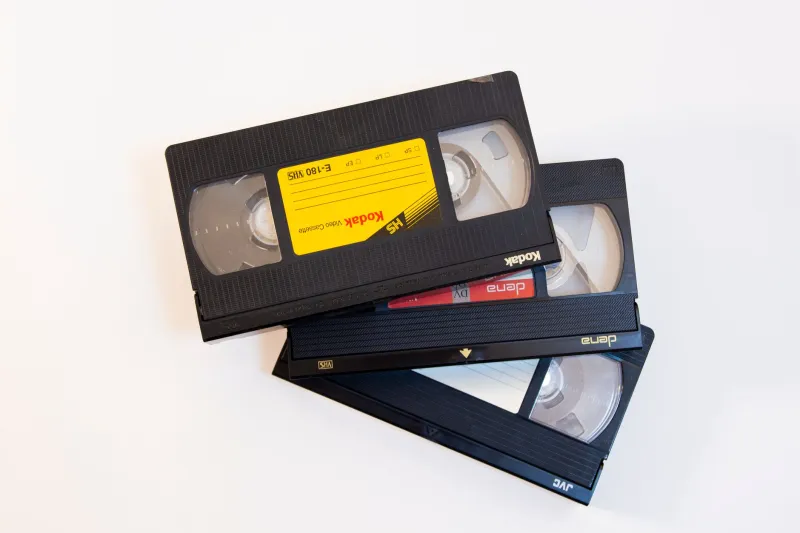
Somewhere in a Midwestern suburb, circa 1989, a guy named Dave — let's call him Dave — is sitting in front of a dual-deck VCR setup, dubbing his third tape of the night. The movie on the master cassette is a Japanese horror film that never got a US distributor. He found out about it through a photocopied newsletter that arrived in the mail six weeks ago. Tonight, three copies go out to addresses in Ohio, Texas, and upstate New York. Nobody is paying anybody. Nobody is asking permission. And nobody is losing sleep over it.
This was the tape trading underground. It existed before anyone had a word for peer-to-peer, before Napster, before the entire philosophical argument about digital piracy got codified into op-eds and congressional hearings. It was analog, slow, and deeply human — and it preserved more film history than most studios ever bothered to.
The Newsletter Was the Algorithm
The infrastructure was surprisingly sophisticated for something built entirely out of paper and goodwill. Traders connected through classified ads buried in the back pages of genre magazines like Fangoria, Video Watchdog, and Deep Red. Some ran their own self-published newsletters — mimeographed, then photocopied, then desktop-printed as the '90s rolled in — listing their catalogs like samizdat mail-order catalogs. You'd write in, share your own list of what you had, and negotiate trades through actual letters.
The currency wasn't cash, at least not primarily. It was access. If you had something rare, you could get something rare back. A Spanish-language print of an obscure giallo might get you a workprint of a film that never officially released in the States. A taped-off-satellite broadcast of a BBC documentary could be traded for a Hong Kong action film that wouldn't see domestic release for another decade, if ever.
These weren't just transactions. They were relationships. Traders built reputations over years. A bad dub — too many generations of copying, washed-out color, muddy audio — could tank your standing in a community that had no Yelp reviews, no verified accounts, no recourse beyond the grapevine. Quality mattered because trust mattered.
What the Studios Didn't Want You to Watch
Here's the part that gets glossed over in nostalgia-friendly retellings: a lot of what moved through these networks was stuff that powerful people actively didn't want in circulation.
That included films that had been pulled from distribution after legal disputes. It included documentaries that had been suppressed or quietly shelved — footage of political events, investigative films that studios or networks had decided were too hot to handle. It included exploitation films that distributors had let lapse into legal limbo, effectively orphaning them. And it included a vast catalog of international cinema that American distributors simply didn't think was worth the investment to license and release.
The traders filled that vacuum. In many cases, the only surviving copies of certain films existed because somebody, somewhere, had taped them off a foreign broadcast or gotten hold of a print and dubbed it before it disappeared. The tape trading underground functioned, unintentionally, as a distributed archive — one with no central server, no institutional backing, and no grant funding. Just a bunch of obsessives with dual-deck VCRs and a deep conviction that these films deserved to exist.
The Ethics Were Always Complicated
Let's not romanticize this into something cleaner than it was. Not everyone in the tape trading world was a principled archivist. Some traders were straight-up bootleggers running cash operations, dubbing and selling tapes of first-run films out of the trunks of their cars. The line between preservation and piracy was genuinely blurry, and different people drew it in different places.
Some traders had a strict code: only trade films that were out of print, unavailable domestically, or otherwise inaccessible through legitimate channels. Others didn't bother with the moral accounting. The community wasn't monolithic, and the ethics were debated in those same newsletters with a seriousness that would feel at home in any modern conversation about digital piracy.
What's interesting, looking back, is how many of the arguments map almost perfectly onto the debates that would erupt again in the Napster era — about access versus ownership, cultural preservation versus intellectual property, the rights of creators versus the rights of audiences. The tape traders were having those arguments in 1991, through the mail, without knowing they were writing a rough draft of the next thirty years of media law.
The Generational Debt Nobody Talks About
Here's what gets overlooked when people talk about the tape trading underground purely as a piracy story: it built the audience for a lot of films that are now considered canonical.
John Woo's The Killer and Hard Boiled circulated extensively through tape trading networks before they had proper US releases. Dario Argento's catalog found American audiences largely through dubbed and subtitled tapes passed hand to hand. Entire waves of Hong Kong cinema, Japanese horror, Italian genre film, and Brazilian exploitation built their US cult followings through this underground before any distributor decided there was a market worth pursuing. The market existed because the traders created it.
Criteria Collection titles, Vinegar Syndrome releases, Arrow Video imports — the contemporary boutique home video industry exists in part because there was a pre-existing audience that had been cultivated by decades of underground tape circulation. The traders were doing unpaid market development for an industry that would eventually, sometimes grudgingly, follow their lead.
The Last Generation of Physical Smugglers
By the late '90s, the internet was already starting to erode the tape trading world. Usenet groups replaced newsletters. Early file-sharing experiments offered faster access than waiting three weeks for a dub to arrive from a stranger in another time zone. The infrastructure that had taken a decade to build started dissolving almost overnight.
But something got lost in that transition that doesn't get discussed enough. The tape trading underground was tactile in a way that digital piracy never could be. You held the thing. You watched it on the same format it was meant to be watched on. The degradation of a fourth-generation dub was itself a kind of record — evidence of how many hands this film had passed through, how many people had decided it was worth the trouble of copying and mailing and watching.
There's a reason the collectors who came up through that era tend to be different from the streaming generation. They didn't just consume media; they handled it. They made choices about what was worth preserving and what wasn't, and they built communities around those choices. The tape was the commitment. You didn't casually add something to a queue — you dubbed it, labeled it, mailed it, and trusted a stranger to do the same.
What the Archive Owes the Traders
Film preservation institutions are now doing the painstaking work of cataloging what survives from the VHS era, and they keep finding that unofficial copies — sometimes those third- or fourth-generation dubs — are the only evidence certain films ever existed. The studios didn't save everything. The traders did.
That's not a comfortable fact for the intellectual property industry, but it's the truth. The bootleg economy was messy, legally gray, and driven by people who didn't ask anyone's permission. It was also, in a very real sense, the first decentralized media preservation network in American history — built not by institutions or archivists, but by fans with too many blank tapes and too much love for films that nobody else wanted to keep alive.
Dave and his dual-deck setup probably didn't think of himself as a cultural preservationist. He just wanted to share a good movie. Turns out, sometimes that's enough.