Static Gold: The Accidental Music Video Archive Living Inside Your Old Tape Collection
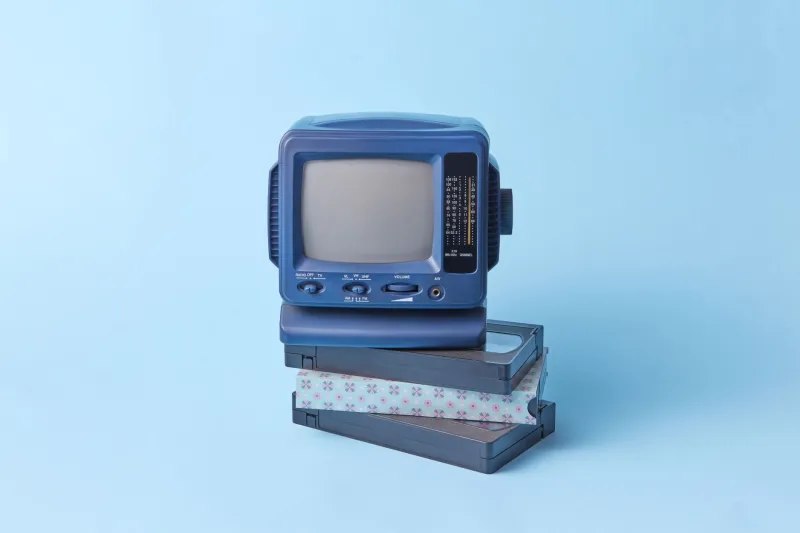
Somewhere in a storage unit in Ohio, a stack of Maxell T-120s holds about forty hours of 120 Minutes recordings from 1991 through 1994. The person who taped them — a then-teenager named Marcus Webb — didn't think of himself as a preservationist. He just didn't want to miss Ride, Lush, or whatever British shoegazer act MTV decided to air at 1 a.m. on a Sunday. He hit record, went to bed, and forgot about it.
Thirty years later, those tapes contain performances and video premieres that simply do not exist in any digital form. Marcus is now one of a loosely connected community of collectors who've realized, somewhat accidentally, that they're sitting on primary sources.
MTV's Memory Hole
It's easy to forget how disposable music videos were considered in the early days of the format. When MTV launched in August 1981, the clips it aired were promotional tools — produced by record labels to sell albums, not intended as art objects worth preserving. The network itself treated its archive accordingly. Licensing agreements expired, master tapes were wiped or lost, and entire eras of rotation simply vanished.
The deeper you go into the catalog — regional acts, one-hit wonders, deep album cuts from mid-tier artists — the worse the preservation gets. Videos that aired regularly throughout the mid-'80s and early '90s have no confirmed surviving copies in any institutional archive. They exist, if at all, on the tapes of people who happened to be watching at the right moment with a blank cassette nearby.
This isn't a niche problem. Researchers at organizations focused on audiovisual preservation have flagged music video documentation as one of the most overlooked gaps in American pop culture history. The irony is sharp: a format specifically designed to be seen has become one of the hardest things to find.
Beyond MTV: The Regional Shows Nobody Digitized
MTV was never the only game in town, and that matters enormously for preservation. Throughout the '80s and '90s, local and regional music video programs filled cable access slots and UHF channels across the country. Shows like Video Soul on BET, Night Tracks on TBS, and dozens of city-specific programs broadcast videos that MTV either ignored or never licensed at all.
These programs had their own flavor — regional acts, genre-specific rotations, local band spotlights — and they were watched and recorded by people who cared deeply about that music. The tapes those viewers made are now the only documentation that some of these broadcasts ever happened.
Collector Denise Howarth, based in Atlanta, spent years digitizing a collection of Night Tracks recordings her older brother assembled between 1983 and 1987. "Some of this stuff I've searched for online and found nothing," she says. "Not even a mention that the video exists. But there it is on his tape, in pretty decent shape, because he used good stock and kept it in a cool closet."
What she found went beyond just music videos. Interstitial segments, VJ commentary, vintage advertisements, and the general texture of a specific broadcast moment were all captured in the same recording. "It's not just the video," she explains. "It's the whole experience of watching TV in 1985."
The Recording Instinct as Preservation
There's something worth sitting with here: the impulse that drove people to tape off the television was never about history. It was about access. In a pre-streaming world, if you wanted to watch something again, you had to own it — and the only affordable way to own a music video was to grab it yourself.
That consumer instinct, multiplied across millions of households with VCRs, created a distributed archive of extraordinary depth. No single institution planned it. No archivist supervised it. It happened because people loved music and wanted to hold onto what they loved.
The challenge now is finding those tapes before time and entropy win. Magnetic tape degrades. Binders break down, oxide flakes off, and playback becomes impossible. The window for recovering what's on these cassettes is not unlimited, and a significant portion of what's already been lost is gone permanently.
Digitization as Community Practice
What's emerged in response is an informal but surprisingly organized preservation effort. Online communities — spread across forums, Discord servers, and social platforms — have become clearinghouses for information about what's been found, what's been digitized, and what's still being searched for.
Collectors share capture files, compare notes on playback equipment, and maintain running lists of videos with no known surviving copies. When someone finds a tape with something rare, the community mobilizes quickly to get a clean digital capture made before the tape degrades further.
The technical side of this work has its own learning curve. VHS playback requires specific hardware — a well-maintained VCR, a time base corrector to stabilize the signal, and a capture card capable of handling composite or S-Video input. Getting a clean, watchable file out of a thirty-year-old tape takes patience and the right setup, and the community has developed detailed guides for doing it properly.
For many collectors, the process has deepened their relationship with the format itself. Handling tapes, understanding how they work, and learning to read the signs of degradation has turned casual nostalgia into something closer to genuine archival practice.
What Gets Found
The discoveries are real and sometimes startling. A collector in Portland recently surfaced a 1986 recording of a regional music program that included a professionally shot performance video from a Pacific Northwest band that never released an album. No other copy has been located. The band's surviving members had no idea the footage existed.
In another case, a taped-off-TV recording of a 1993 MTV premiere turned out to be the only surviving copy of the original edit of a music video that was later recalled and recut before its official release. The version on the tape is the version that aired once and was never seen again — until a collector in Michigan found it under a box of Christmas decorations.
These aren't isolated flukes. They're the predictable result of a generation of passionate, habitual recorders who kept their tapes and kept them reasonably well.
The Clock Is Still Running
The urgency here is real. Every year, more tapes become unplayable. Every garage sale, estate cleanout, and curbside trash pile is a potential loss. The community working on music video preservation is doing meaningful work, but they're doing it without institutional support, without funding, and often without recognition.
If you've got old tapes — yours, your parents', a relative's — it's worth knowing what's on them before you let them go. A few hours of Headbangers Ball from 1989 might feel like junk. To someone researching the visual history of heavy metal, it might be the only record of something that otherwise no longer exists.
Marcus Webb is still working through his 120 Minutes tapes, one at a time, with a JVC deck he refurbished himself and a capture setup he built from community recommendations. He's found three videos so far with no confirmed online presence. He's uploading them carefully, documenting the source tape, the broadcast date, and whatever context he can reconstruct.
"I wasn't trying to save anything," he says. "I was just a kid who liked music. But I guess that's how most of this stuff gets saved — by accident, by people who just couldn't let go."