Picking the Wrong Horse: What the Format Wars Taught Us About the Media We Love
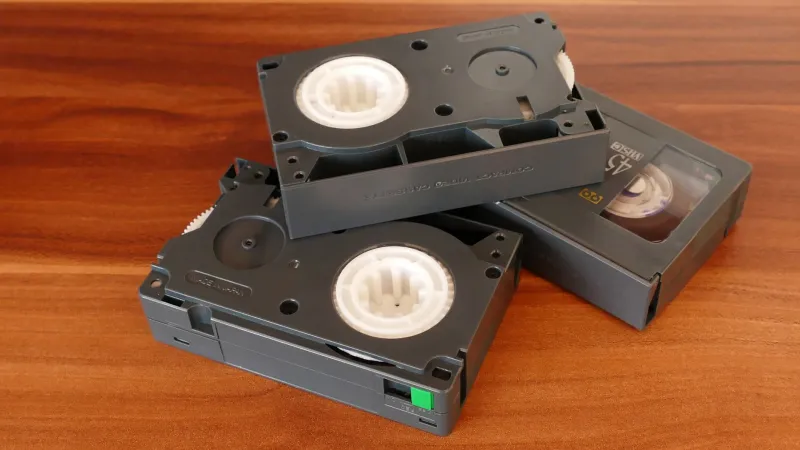
Somewhere in a garage in suburban Ohio, there's probably still a Betamax deck sitting in a box. Maybe it belonged to a dad who read every consumer electronics magazine cover to cover in 1977 and made what he genuinely believed was the smart, informed choice. He wasn't wrong about the technology. He was just wrong about everything else that matters when a format goes to war.
The home video format battles of the late 1970s and 1980s weren't just a corporate skirmish. They were a defining moment in how Americans consumed entertainment at home — and the losers weren't just the companies. They were regular people who bought in early, committed hard, and watched their investment quietly become a museum piece.
The Contenders Nobody Remembers
Everybody knows the Betamax versus VHS story at this point. Sony launched Betamax in 1975. JVC countered with VHS in 1976. Two formats, one living room, no mercy. But that framing leaves out a surprisingly crowded field of also-rans that have been almost completely scrubbed from the popular memory of this era.
Philips had its own horse in the race: the Video 2000 system, released in Europe in 1979. It was technically impressive — double-sided tape, solid picture quality — but it never made a serious run at the American market. Then there was SelectaVision, RCA's bold and deeply strange bet on capacitance electronic disc technology. Not a tape at all, but a grooved disc read by a stylus, like a vinyl record crossed with a video player. RCA sank somewhere in the neighborhood of $580 million into SelectaVision before pulling the plug in 1984. Collectors today hunt those discs with genuine enthusiasm, but at the time, it was a spectacular corporate wipeout.
Magnavox and Philips also pushed LaserDisc into the American market, which actually survived as a niche format well into the 1990s — beloved by cinephiles for its picture quality, but priced out of mainstream reach and never capable of recording. LaserDisc is a fascinating footnote: it didn't really lose the format war so much as it opted out of fighting it.
Why VHS Won (And It Wasn't Really About Quality)
Here's the part that still stings for Betamax loyalists: Sony's format was, by most technical measures, the better product. Betamax offered sharper resolution and generally cleaner playback. Engineers and early adopters recognized this. Consumer Reports recognized this. And yet.
VHS won for reasons that had almost nothing to do with picture quality. The earliest VHS tapes could hold two hours of content. Betamax, at launch, maxed out at one hour. That single fact — one hour versus two — was enough to make VHS the obvious choice for recording movies. And then there was the adult entertainment industry, which threw its weight behind VHS early and decisively, flooding the rental market with content that drove hardware sales in ways that nobody in the mainstream press wanted to discuss openly at the time.
JVC also pursued an aggressive licensing strategy, getting multiple manufacturers to produce VHS-compatible hardware and flooding retail shelves with options at different price points. Sony was more protective of Betamax, more controlling of the ecosystem. In a mass-market fight, that kind of openness almost always wins.
By the mid-1980s, video rental stores — which were multiplying across the country at a genuinely staggering pace — were stocking VHS titles at a ratio that made Betamax sections an afterthought. Once the rental market tipped, the consumer market followed. Sony kept manufacturing Betamax machines until 2002 and Betamax tapes until 2016, a quiet, stubborn commitment that almost feels like an apology.
The Collectors Who Backed the Losing Side
Spend any time in VHS collecting communities and you'll find people who still have a soft spot for the formats that didn't make it. Some of them remember being the kid whose family had the Betamax deck, which meant they couldn't rent half the movies their friends were watching. Others came to these formats later, drawn precisely by their obscurity.
SelectaVision collectors are a particularly dedicated group. The CED discs — Capacitance Electronic Disc, to use the full name — have a devoted following that has built online communities, catalogued available titles, and tracked down working players with the same energy that drives VHS preservation. There's something appealing about a format so thoroughly defeated that it almost feels secret now.
For many collectors, the formats that lost carry a kind of emotional weight that the winner doesn't. VHS is familiar, comfortable, everywhere. A Betamax tape of a made-for-TV movie from 1979 feels like a genuine artifact — something that survived against the odds, something that needs protecting.
The Pattern Keeps Repeating
It would be easy to treat the format wars as ancient history, a quaint battle from before everything went digital. But the same dynamics play out constantly, just with different names on the hardware.
HD-DVD versus Blu-ray in the mid-2000s was almost a direct replay of the VHS-Betamax dynamic, right down to the studio allegiances and the rental market tipping the scales. Blu-ray won in 2008 when Warner Bros. dropped HD-DVD support, and millions of early adopters were left with expensive players and a format that was already dead.
And now? Streaming services are running their own version of the same war in slow motion. Content is being pulled from platforms, exclusive deals are reshuffling constantly, and entire libraries of films and television exist only on services that could restructure, merge, or vanish with relatively little warning. The lesson from Betamax — that the better product doesn't always survive, and that the platform controlling your content controls your access to it — feels more relevant now than it ever did.
What We Hold Onto
There's a reason the VHS collecting community exists, and it's not purely nostalgia, though nostalgia is certainly part of it. Physical media is a hedge against exactly the kind of format instability that defined the 1980s and continues to define media consumption today. A tape on your shelf doesn't disappear when a licensing deal expires. It doesn't get pulled from a library because a streaming service decided it wasn't performing.
The people who backed Betamax, who bought SelectaVision players, who invested in formats that didn't survive — they weren't foolish. They made reasonable bets in an uncertain market. What they couldn't have known was how thoroughly the losing side gets erased, not just from stores and rental shelves, but eventually from memory itself.
That's part of what preservation is about. Not just saving the tapes that won, but keeping the record of everything that got left behind — the formats, the machines, the choices people made, and what those choices cost them. Because every format war has losers, and the losers always have a story worth telling.