The Vault Reopens: Why Hollywood Is Going Back to VHS to Find Films It Left Behind
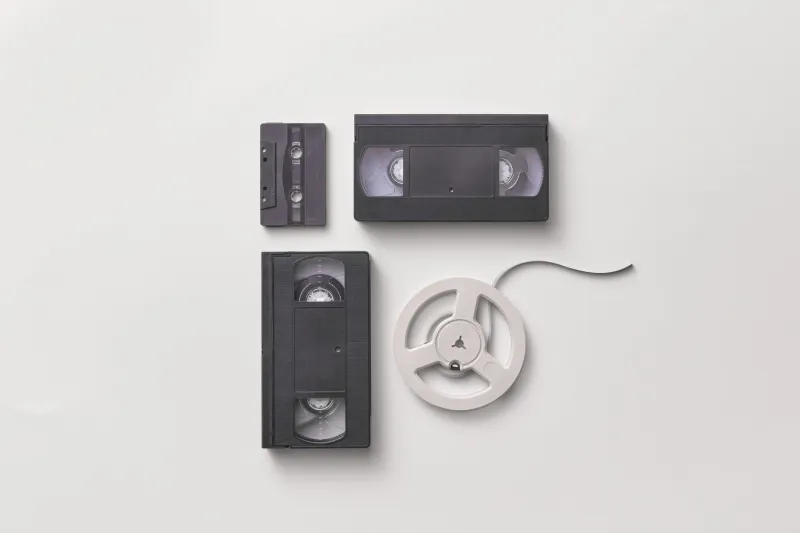
When the DVD revolution hit in the late 1990s, the entertainment industry made a series of decisions that seemed perfectly rational at the time. Studios had limited budgets for format transfers. Consumer interest was highest for proven hits, franchise films, and prestige titles. The long tail of their catalogs — the B-movies, the regional thrillers, the obscure genre pictures that had moved quietly through video rental stores for a decade — got left behind.
Those decisions created a strange category of film: movies that existed, had been seen by real audiences, had genuine cultural footprints in some cases, but had no presence in the digital landscape whatsoever. No DVD. No streaming availability. No Blu-ray. Nothing.
For many of these titles, the only surviving consumer-accessible copies were VHS tapes.
Now, quietly and somewhat surprisingly, that's starting to change.
The Scale of the Problem Nobody Talked About
The number of films that fell through the cracks in the digital transition is genuinely staggering. Film historians and archivists have been sounding alarms about this for years, but the issue rarely made mainstream news. It wasn't dramatic enough — no catastrophic fire, no single moment of loss, just a slow institutional neglect that accumulated over two decades.
Estimates vary, but researchers studying the problem have suggested that thousands of films released on VHS between roughly 1977 and 1998 have never received any subsequent digital release in any format. These aren't all obscure titles. Some are films with recognizable names attached, productions backed by distributors that no longer exist, or regional releases that found genuine audiences in specific markets before disappearing entirely when those distributors went under.
The complicating factor is rights. The landscape of who actually owns what in the world of older independent and B-movie productions is extraordinarily tangled. Distribution companies folded. Rights were sold, re-sold, and sometimes lost entirely in bankruptcy proceedings. Tracking down who holds the rights to a 1984 regional horror film can require the kind of legal detective work that makes the economics of restoration challenging to justify — unless someone is sufficiently motivated.
Increasingly, some people are sufficiently motivated.
What's Actually Driving the Restoration Push
The current wave of interest in VHS-era forgotten films is being driven by several converging forces, and it's worth separating them out because they have different implications for what gets preserved and how.
On the studio side, the explosion of streaming platforms has created an almost insatiable demand for catalog content. Netflix, Hulu, Shudder, Tubi, and dozens of smaller services are all competing for library titles that can fill out their offerings at relatively low cost. That economic pressure has pushed rights holders to take a harder look at what they actually own — and in some cases, to discover titles they'd essentially forgotten about.
Shudder, the horror-focused streaming service, has been particularly active in this space. The platform has licensed and in some cases helped facilitate the restoration of horror and genre titles that had been VHS-only for decades. Their audience — genre enthusiasts who are often deeply familiar with the history of horror cinema — actively wants this content, which makes the economics more favorable than they would be for a general entertainment platform.
"There's a real audience for this stuff, and that audience has been waiting a long time," notes film historian and preservation advocate Carl Dempsey, who has consulted on several catalog restoration projects. "Streaming platforms figured out that horror fans in particular will watch things that mainstream audiences wouldn't touch, and that opened a door for a lot of titles that had been sitting in limbo."
On the independent side, a different kind of motivation is at work. Small labels like Vinegar Syndrome, Severin Films, and Kino Lorber have built entire business models around rescuing obscure genre films and releasing them in high-quality physical editions. These companies do the rights detective work, track down surviving elements (sometimes including the original camera negative, sometimes not), commission new transfers, and package the results for an audience of dedicated collectors.
For some of these titles, VHS tapes have served as an unexpected preservation resource — not as the source for a new transfer, but as a reference point for color timing, as evidence of what cut of a film was actually distributed, or as the only surviving audio source when original elements are incomplete.
When VHS Is the Best Available Source
This is perhaps the most surprising development in the preservation conversation: the cases where VHS isn't just a stopgap but is actually the best available source material for a given title.
Original film negatives deteriorate. They get lost in studio vault fires — the 1937 Fox vault fire and the 2008 Universal fire being two of the most devastating examples. They get damaged in floods, mismanaged in storage, or simply discarded when a distribution company couldn't see the value in paying for climate-controlled archiving.
In those situations, a well-preserved VHS tape can represent the highest-quality surviving version of a film. The resolution is obviously limited compared to a film scan, but it's infinitely preferable to having nothing at all.
Vinegar Syndrome has released several titles where the VHS master was the primary source, presenting them honestly with appropriate context about what they are. Collectors in that community have generally embraced this approach — the alternative, after all, is not having the film available at all.
Some preservation projects have also used multiple VHS copies to reconstruct more complete versions of films that exist in different edit configurations across different tape releases. If a film was cut differently for its theatrical run, its initial VHS release, and a later reissue, comparing those tapes can reveal things about a film's production history that no other source could show.
What Collectors Are Watching — and What They're Hoping For
Within the VHS collecting community, the restoration trend is generating both excitement and some complicated feelings.
On one hand, seeing long-lost titles get proper releases is unambiguously good news for anyone who cares about film history. Titles that existed only in collector circles — traded on degraded dubs, discussed in online forums, whispered about as impossible-to-find — are suddenly accessible to a much wider audience. That's a genuine cultural win.
On the other hand, there's a real conversation happening about what restoration means for the original objects. Part of what makes VHS collecting compelling is the scarcity and the specificity of the format — the experience of watching something in the way it was originally experienced by rental audiences in 1986. A clean digital restoration, however welcome, is a different thing.
"I'm happy these movies are getting seen," says collector and archivist Renata Fuentes, who has spent years tracking down obscure regional releases. "But I'm also still going to want the tape. The tape is the artifact. The streaming version is the copy."
The titles collectors are most hoping to see rescued from VHS limbo tend to cluster in a few categories: shot-on-video regional horror from the '80s and early '90s, obscure action and exploitation films from small distributors that no longer exist, and the occasional oddity — a documentary, a comedy special, a made-for-TV movie — that has simply never been seen since its initial release.
A Reckoning That's Long Overdue
The broader story here is really about what gets preserved and why. For most of film history, the decision about what was worth saving was made by institutions — studios, archives, film libraries — that applied their own criteria, which often had more to do with commercial value than cultural significance.
VHS changed the equation by democratizing distribution. Films that would never have found an audience through theatrical release could reach viewers through the video store. That created a body of work that existed entirely outside the traditional preservation infrastructure.
Now, a combination of streaming economics, dedicated independent labels, and passionate collector communities is slowly bringing that body of work back into view. It's not a complete solution — rights tangles will keep some titles inaccessible for years, and some films are simply gone — but it's more progress than anyone would have predicted a decade ago.
The tape is running. But for a lot of these films, it turns out there's still time to hit record.