Painted in Panic and Genius: The Wild Visual World of VHS Cover Art
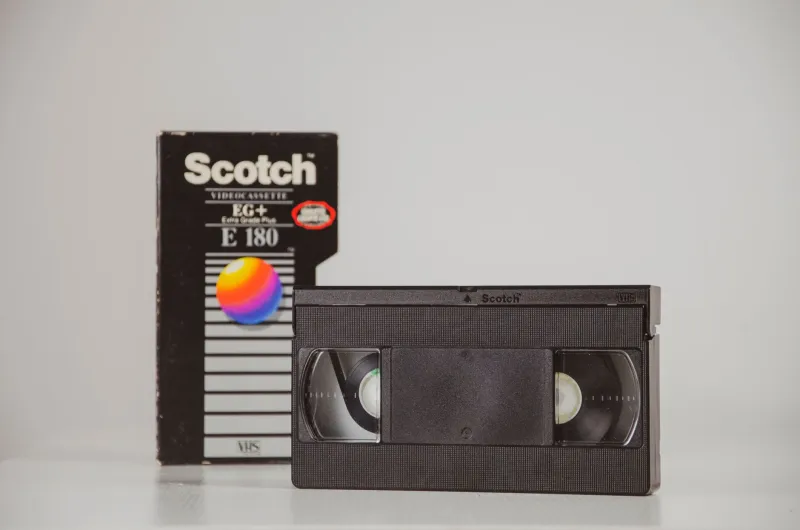
Walk into any video store in 1987 and the experience was fundamentally visual. Thousands of cardboard boxes lined the walls, each one making a silent pitch. You couldn't stream a trailer. There was no Rotten Tomatoes score hovering over the shelf. There was just the art — and whether it grabbed you or not determined everything.
In that environment, VHS cover design wasn't decoration. It was survival.
The artists and illustrators who painted, airbrushed, and composited those covers were working under brutal constraints: tight deadlines, tiny budgets, and the impossible task of distilling an entire film's appeal into a single 7.5 x 4.5 inch rectangle of cardboard. What they produced, against all odds, became one of the defining visual languages of American popular culture in the 1980s and '90s.
And for a growing community of collectors, those covers are now the point entirely.
The Economics That Created a Genre
To understand why VHS box art looks the way it does, you have to understand the economics behind it. When the home video market exploded in the early 1980s, it wasn't the major studios leading the charge — it was independent distributors and regional labels scrambling to fill shelf space at video rental stores across the country.
These companies operated on shoestring budgets. They couldn't afford to license stills from major productions or hire top-tier design agencies. What they could afford was a freelance illustrator willing to paint a werewolf in three days for a flat fee. Or an airbrush artist who could make a no-name action flick look like it starred someone famous from a certain angle.
This financial desperation, paradoxically, produced extraordinary creativity. Artists weren't constrained by corporate brand guidelines or focus-grouped design systems. They were handed a title, maybe a brief plot summary, and told to make something people would pick up. The results ranged from genuinely striking to magnificently absurd — sometimes both at once.
"The covers were often better than the movies," says Marcus Webb, a collector based in Portland, Oregon, who has assembled over 800 original VHS sleeves over the past decade. "And I mean that as a compliment to the artists, not a knock on the films. Those painters were doing something real. They were making you feel something in about three seconds."
The Artists Behind the Airbrushing
Most VHS cover artists worked in near-total anonymity. Unlike movie poster illustrators — figures like Drew Struzan, whose painted posters for Star Wars and Indiana Jones became iconic — the people creating home video art rarely received credits and almost never received recognition.
Some names have emerged through collector research and archival digging. Ken Barr, a British illustrator who worked extensively for American horror and action distributors, is now recognized as one of the most prolific and technically accomplished artists of the era. His work for labels like Vestron Video and Media Home Entertainment shows a painter working at a high level despite the low-prestige context.
For the horror genre specifically, several artists developed signature styles that collectors have learned to recognize even without attribution. The hyper-realistic gore paintings that defined companies like Wizard Video and Continental Video had a distinct aesthetic — lurid, confrontational, and oddly beautiful in their commitment to excess.
Other covers leaned in a completely different direction: hand-lettered titles with a kind of naive charm, or photo-collage compositions that look like ransom notes assembled by someone who had definitely seen a lot of movies but maybe not many art galleries. These covers have their own devoted following among collectors who prize them precisely for their outsider energy.
Regional Variants and the Holy Grail Problem
For serious collectors, the hunt isn't just for the covers — it's for the right version of the covers. The VHS market was deeply regional and often chaotic, and the same title might have been released with different artwork depending on the distributor, the year, and the territory.
These variants drive a significant portion of collector obsession. A horror title might have three or four known cover versions, each with slightly different artwork, different spine designs, or different taglines. Finding a specific regional pressing of a specific title in a specific sleeve variant is the kind of granular pursuit that distinguishes casual collectors from the deeply committed.
"The variant hunting is what keeps it interesting," says Dani Kowalczyk, who runs a VHS collector community on social media and has been cataloging cover variants for six years. "You think you have the complete picture of a title, and then someone posts a version you've never seen from a distributor you didn't know existed. It keeps the hobby alive."
Some of the most sought-after box art in the current market comes from titles that were barely noticed on release. Regional horror films, shot-on-video productions, and direct-to-video action movies from the mid-to-late '80s often had the most visually aggressive — and now most collectible — cover designs. The mainstream releases from major studios tend to be less interesting to serious collectors; it's the fringes where the real visual adventurousness lives.
The Most Collected Cover Art Right Now
Ask any active collector which categories are generating the most heat right now and a few themes emerge consistently.
Slasher horror big box editions — the oversized clamshell cases used by labels like Wizard Video for titles like The Texas Chain Saw Massacre — are perennial favorites. The combination of imposing size and often disturbing painted art makes them the crown jewels of many collections.
Italian genre imports adapted for the American market sit at the intersection of two collector worlds: those who love the films and those who love the art. Distributors who licensed Italian horror and giallo films for American release often commissioned new cover art that had only a loose relationship to the actual film, resulting in some of the most gloriously misleading images in the history of commercial art.
Shot-on-video (SOV) horror from the late '80s and early '90s has seen a massive surge in collector interest over the past several years. These were films made on consumer-grade video equipment by regional filmmakers with essentially no budget, but the covers sometimes had a raw, handmade quality that collectors find deeply appealing — folk art by way of video store shelf.
Why This Matters Beyond Nostalgia
It would be easy to frame VHS box art enthusiasm as pure nostalgia — grown-ups chasing the visual memories of childhood Friday nights at the video store. And sure, that's part of it. But there's something more substantive happening too.
These covers are primary documents of a specific cultural moment: a period when visual communication was physical, when you couldn't instantly look up what a movie was about, when a single image had to do enormous communicative work. They represent a mode of commercial art-making that no longer exists in quite the same form.
They also represent the work of hundreds of artists who never got credit, never got residuals, and never got retrospectives — people who were genuinely skilled at what they did and whose work shaped the visual imagination of an entire generation.
Collectors who preserve these covers aren't just accumulating stuff. They're maintaining a record of something that would otherwise be quietly discarded. In that sense, the VHS box art community and the broader VHS preservation community are doing the same work: refusing to let the tape run out on things that mattered.