Hold It or Fold It: The Collector's Guide to Letting Go of Your VHS Library
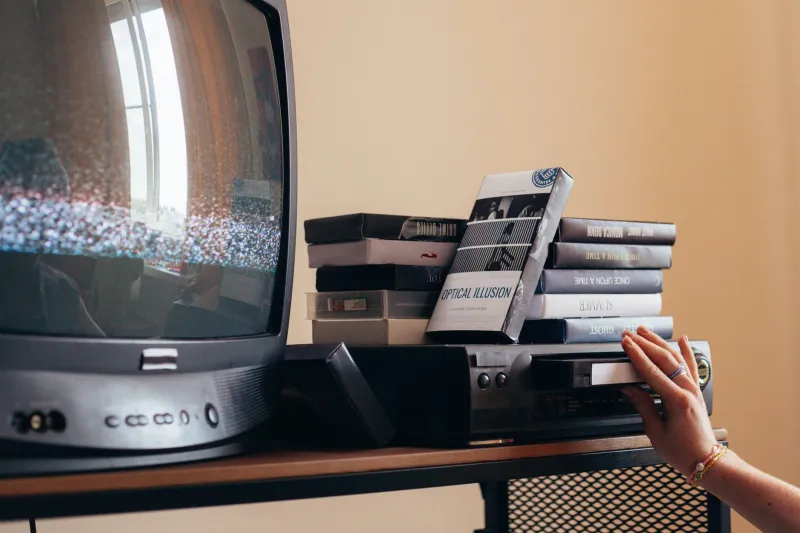
You know the feeling. You're standing in front of a wall of black plastic bricks, coffee going cold in your hand, trying to remember why you bought seventeen copies of Ace Ventura: Pet Detective at that estate sale back in 2019. The collection made sense when it started. Now it's a small city, and someone in your household is giving it the side-eye.
Deciding what to keep, sell, or donate from a VHS collection isn't just a logistical problem — it's a philosophical one. These tapes carry memories, history, and for some titles, genuine cultural weight. But they also take up real space and, left unchecked, can quietly deteriorate into nothing. So how do you actually make the call?
Start With Condition, Not Sentiment
Before you get into the emotional stuff, run a quick triage based on physical condition. A tape you love that has already degraded past playback isn't a collectible anymore — it's a monument to something gone. Pull out tapes you haven't watched in years and give them a once-over.
Look for the obvious red flags: warped shells, cracked cases, mold (that fuzzy white or greenish bloom on the tape itself), and the dreaded sticky-shed syndrome where the binder on the tape starts breaking down and gumming up your VCR heads. Tapes showing any of these signs need a decision made fast. Some can be professionally baked and transferred before they're gone for good — but that costs money and time. Others are simply done.
If a tape plays clean, smells neutral (musty is bad; vinegar smell is really bad), and the shell is intact, it's still in the game. That's your baseline.
Rarity Changes Everything
Not all VHS tapes are created equal, and rarity is the factor that separates a yard sale item from something worth real money. A few things to consider:
Was it ever given a wide release? Studio blockbusters from the late '80s and '90s were pressed in enormous quantities. Your copy of Forrest Gump is not rare. There are millions of them. Meanwhile, regional horror films, direct-to-video releases with limited distribution, and anything released by a label that folded quickly can be surprisingly scarce.
Is it a big box? The clamshell big-box releases from the early home video era — especially from labels like Vestron, Media Home Entertainment, or Lightning Video — have developed a serious collector following. These are worth keeping or selling intentionally, not tossing.
Is it a screener or promo copy? Tapes stamped "For Promotional Use Only" or "Screener" were never meant for consumer sale and weren't produced in large numbers. These can be legitimately collectible.
A quick search on eBay's sold listings (not active listings — sold ones, so you know what people actually paid) will give you a fast reality check on value. You might be sitting on something worth $40 or $4. Either answer is useful.
The Sentimental Tier Is Real, and That's Okay
Here's where collectors get tripped up: they try to apply pure logic to something that was never purely logical. You didn't buy half these tapes as investments. You bought them because they meant something — a movie you watched with your dad, a TV special your mom recorded off cable in 1993, a rental store sticker that still makes you smile.
Give yourself permission to have a sentimental tier. Not everything needs to justify its shelf space with dollar signs. But be honest about the size of that tier. If everything is sentimental, the word stops meaning anything. Pick the ones that genuinely matter — the ones tied to specific people, specific moments, specific feelings — and protect those. Everything else can be evaluated more coldly.
A good rule of thumb: if you can't tell someone a specific story about why you own it in under thirty seconds, it might not belong in the sentimental tier.
Storage Solutions for the Keepers
For the tapes that make the cut, storage isn't just about space — it's about survival. VHS tape is magnetic media, and it has preferences.
Temperature and humidity matter more than most people realize. Tapes degrade faster in hot, humid environments. Avoid attics and garages if you can. A climate-controlled room or closet is ideal. The Library of Congress recommends storing magnetic media around 65°F with relative humidity between 30 and 40 percent — you don't need to be that precise, but the direction matters.
Store tapes vertically, spine out. Laying them flat puts uneven pressure on the reels over time. Vertical storage, like books on a shelf, keeps tension even.
Rewind before storing. Tapes stored in a half-played state can develop print-through, where the magnetic signal from one layer bleeds into adjacent layers. Fully rewound and stored upright is the safest position.
Keep them away from speakers and electronics. Magnetic fields from speakers, motors, and other devices can slowly degrade the signal on your tapes. It's an old concern but still a valid one for long-term storage.
For serious collectors with large libraries, archival-quality plastic bins with lids (not cardboard boxes, which attract moisture and pests) are worth the investment. Label everything. Future you will be grateful.
The Middle Path: Selling and Donating
Not everything that leaves your collection has to go in the trash. In fact, the VHS community actively benefits when collections circulate rather than disappear.
Selling through eBay, Facebook Marketplace, or dedicated collector groups on Reddit (r/VHS is active and knowledgeable) puts tapes in front of people who actually want them. Even common titles can move in bulk lots — plenty of collectors are happy to pay a few bucks for a clean copy of something they're missing.
Donating is another solid option. Thrift stores like Goodwill still accept VHS in many locations, and some public libraries and community media centers actively want them. Organizations focused on media preservation — particularly those archiving regional or local content — may be interested in tapes that seem mundane to you but are historically significant to them.
If you have tapes with home recordings — family events, local news captures, anything original — please don't dump those without exploring digitization first. That content exists nowhere else in the world. Services like Legacybox or your local library's digitization programs can pull that footage off the tape before it's gone.
The Real Answer Nobody Wants to Hear
There's no universal rule for when to let a tape go. The honest answer is that it's a negotiation between what the tape is, what it means to you, and what you're actually able to maintain. A collection you can store properly and actually enjoy is worth keeping. A collection rotting in boxes you never open is a slow-motion loss.
Rewind what matters. Let the rest find a new home. That's the collector's code, and it's served the VHS community pretty well so far.