The Shelf Built the Intermission: How Two-Tape Epics Rewired Long Movies
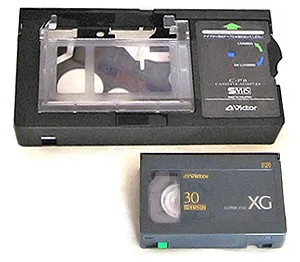
Photo: Super-VHS-Compact001.JPG: 阪神強いなプラス(Japanese User), CC BY-SA 3.0, via Wikimedia Commons
Long movies used to arrive with a seam. Not a seam in the story, exactly, but a seam in the plastic. On VHS, an epic might come in a fat box with two cassettes, and somewhere in the middle of the film the picture would stop, the tape would click, and you would have to get up. In 2026, when a three-hour movie can pause wherever the remote says, that forced break can look primitive. It was also a quiet shaping force on how a generation experienced big movies at home.
The Break You Did Not Choose
A two-tape release was a distribution decision before it was an aesthetic one. Tape length, duplication costs, packaging, and retail shelf space all pushed studios toward splitting long features. The split usually landed near a reel change or a natural act break, but not always. Sometimes part one ended on a cliffhanger. Sometimes it ended mid-conversation. The studio chose the breath, not the director, and definitely not the viewer. That made the home version a different object from the theatrical version. The movie was still the movie, but the evening had a hinge.
Pacing by Plastic
At home, that hinge did strange things to rhythm. A forced pause could deflate a tense sequence or give a slow middle room to breathe. It could turn a family room into a lobby for five minutes. Someone checked the pizza. Someone hunted for tape two. Someone rewound part one because the label said to. The break made viewers aware of structure in a way that streaming rarely does. You felt the movie's length because you had to physically carry it across the room. You also got a built-in intermission that theatrical roadshow pictures once used deliberately. VHS did not invent the intermission, but it accidentally democratized it.
The Ritual of the Flip
The two-tape epic created its own small rituals. You learned to keep both cassettes together. You learned that tape two could be missing, damaged, or mysteriously labeled with a marker that had faded to a rumor. Rental copies made the stakes higher. If only one tape was in the box, the movie was not a movie anymore; it was a hostage situation. Families developed choreography: pause, stretch, refill drinks, check the VCR clock, load the next tape. Collectors today still chase complete two-tape sets because the second cassette is half the artifact. A lonely part one tells you the film existed. A matched pair tells you how people watched it.
What the Pause Preserved
Streaming has given us total control, and that is mostly a gift. But control has a cost. When every break is optional, the break disappears, and with it a certain social rhythm. The two-tape epic made long movies a shared event with a built-in halftime. It also left a record. The split point, the labels, the part one and part two language, the box art that promised an evening rather than a click: these are evidence of how home video translated cinema into living rooms. For preservation-minded collectors, that evidence matters. A tape is not just a copy of a film. It is a copy of an experience, and the cassette break is part of the experience.
The Archive Should Remember the Hinge
None of this means every two-tape release was artful. Some splits were clumsy. Some tapes were pan-and-scan, worn out, or duplicated badly. But the clumsy split is still history. It shows what the studio thought a home audience could handle, where the packaging wanted a pause, and how the machinery of VHS shaped attention. In 2026, as long movies premiere at home with no interruption at all, the two-tape epic looks less like a limitation and more like a lost grammar. The seam was annoying. It was also a way of making length feel real. Keep the pair together. Keep the box. The hinge belongs in the archive.