The Person Behind the Counter: How Video Store Clerks Quietly Shaped American Film Taste
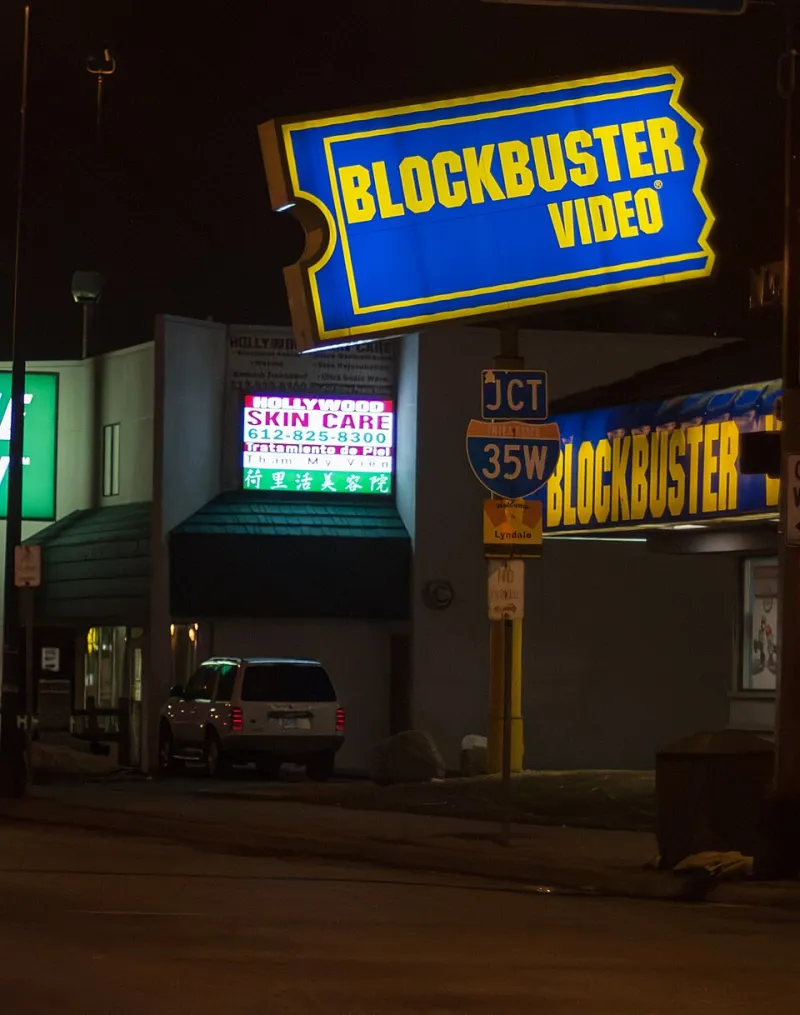
Photo: Tony Webster, CC BY 2.0, via Wikimedia Commons
At some point in the late '80s or early '90s, you probably walked into a video store with only a vague idea of what you wanted. Maybe a name you half-remembered, maybe a genre, maybe just something good. And the person behind the counter — slightly bored, aggressively knowledgeable, and working for eight dollars an hour — saved your Friday night.
They pointed you toward something you'd never heard of. They told you the movie on the New Releases wall wasn't worth it and steered you to a three-year-old action film in the back. They wrote "If you liked Aliens, you need to watch this" on a piece of cardboard and taped it to a shelf where it stayed for six months.
Those clerks didn't have job titles that reflected what they actually did. They were curators. They were critics. They were, in the most literal sense, the people who decided what America watched on weekends.
The Algorithm Before Algorithms
Here's the thing about a recommendation engine: it tells you what people like you watched next. It optimizes for engagement, for retention, for the path of least resistance between you and a title you'll probably finish.
A video store clerk did something fundamentally different. They told you what they thought you should watch — and they were often wrong, and sometimes brilliantly right, and either way they were making a judgment rather than a calculation.
That distinction is enormous. A judgment carries a person's taste, their experience, their specific enthusiasm for a director or a genre or a performance. It's a recommendation with a voice attached to it. When a clerk at a Blockbuster in suburban Ohio hand-sold you on a subtitled Japanese horror film because they'd watched it three times in the back room and couldn't stop thinking about it, they were doing something no algorithm has ever been designed to do: they were sharing a genuine response to art.
The best video store clerks were essentially running a one-person film school from behind a laminate counter. They knew their inventory the way a bookseller knows a bookshop — not just the titles, but the texture of each one. Which films played better on a second watch. Which ones you needed a specific mood for. Which ones looked cheap but were actually remarkable. Which ones looked expensive and were actually terrible.
The New Releases Wall as Editorial Statement
Every video store had a New Releases wall, and every New Releases wall was a curated space even when nobody called it that.
The mechanics were simple: studios shipped new titles, stores displayed them prominently, customers rented them. But within that system, there was enormous room for human judgment. Which titles got face-out placement? Which got spine-out? Which films got the handwritten staff recommendation card, and which ones got nothing?
At the big chains — Blockbuster, Hollywood Video, Movie Gallery — corporate controlled most of this. Placement was often paid for, promotional, a function of studio relationships rather than genuine enthusiasm. But at the independent stores, the ones that lasted longest in small towns and college neighborhoods, the New Releases wall was a genuine editorial product. The person who built it was telling you something about what they thought was worth your time.
Independent clerks also curated in ways that had nothing to do with new releases. They built sections. They created categories that didn't exist in any corporate taxonomy — "Midnight Movies," "Staff Picks That Aren't What You Think," "Foreign Films That Will Ruin You (In the Best Way)." These weren't marketing tools. They were arguments about film, made physical.
The Hidden Gems They Actually Found
The cultural legacy of video store clerks is most visible in the careers of filmmakers who got their break not through marketing but through word of mouth that started behind a counter.
This is well-documented in Quentin Tarantino's case — he's talked extensively about his years clerking at Video Archives in Manhattan Beach, California, and the education he got from simply watching everything the store stocked. But the influence ran in both directions. Clerks at independent stores across the country were hand-selling Reservoir Dogs and Clerks and El Mariachi to customers who would never have found them otherwise. They were building audiences for independent cinema one rental at a time.
The same thing happened with foreign film, with horror, with documentaries. Sections of the store that major studios didn't care about became, in the hands of the right clerk, genuine discovery zones. People who grew up in small American cities with one video store often cite those stores as their entire film education — not because of what the studios put on the shelves, but because of what the person behind the counter told them to pick up.
Why Their Absence Actually Matters
It's tempting to frame the loss of video store culture purely in terms of nostalgia — the warm lighting, the physical browsing, the satisfaction of walking out with a tape in your hand. But the practical loss of the clerk is something harder to replace than ambiance.
Streaming services have spent considerable money trying to solve the discovery problem — the challenge of helping subscribers find things they'll love in a catalog that now contains tens of thousands of titles. They've built recommendation engines, created editorial content, developed curated collections, and hired teams of humans to write descriptions and create themed rows on the homepage.
None of it works as well as a knowledgeable person who can look at you, ask two questions, and hand you exactly the right thing.
The reason is partly about personalization and partly about trust. You trusted a video store clerk not because they had data on your viewing history but because they were present, because they had watched the thing themselves, and because their recommendation was a social act with a human being attached to it. If they steered you wrong, they'd hear about it next time you came in. That accountability made their recommendations meaningful in a way that a star rating from a stranger on an app simply isn't.
What They Left Behind
The clerks are mostly gone now, scattered into other industries, though a handful found their way into podcasting, film criticism, and the small but committed world of repertory cinema programming. Their sensibility — the belief that film taste is worth developing, that discovery is a skill, that someone should be actively pointing people toward the good stuff — didn't disappear entirely. It just lost its storefront.
In the VHS collecting community, you can still find echoes of it. The collector who maintains a spreadsheet of underrated '80s horror and will email it to anyone who asks. The person running a tape-trading group who writes paragraph-long descriptions of every title they have available. The archivist who builds themed collections and posts about them with the same enthusiasm a clerk used to tape to a shelf.
The medium changed. The impulse didn't.
Somewhere right now, someone is trying to tell you about a movie you've never heard of and won't be able to stop thinking about once you've seen it. The counter is gone, but the recommendation is still coming.
You should probably listen.