Between the Shows: The Accidental Advertising Time Capsule Hiding on Your Old Recorded Tapes
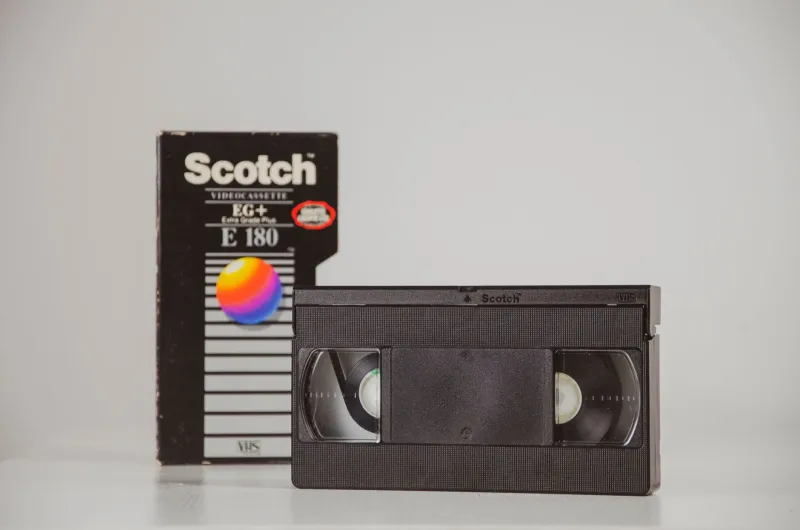
The show you recorded is the reason the tape exists. But the commercials are the reason it matters.
This is the strange inversion that archivists, collectors, and media historians are grappling with as digitization efforts continue to surface millions of home-recorded VHS tapes from attics, storage units, and thrift store bins across the country. The programs people intentionally captured—the sitcoms, the sports events, the holiday specials—those often exist in official archives somewhere. The commercials that ran between them? Mostly gone. Except on these tapes.
What Nobody Meant to Save
Home VHS recording was never about preservation. People recorded things because they wanted to watch them again, or because they'd miss them the first time around. The commercials were just what happened between the parts that mattered. Most people hit fast-forward through them on the second viewing and thought nothing more about it.
But the tapes didn't care about intent. The VCR recorded everything the broadcast signal carried, and that meant every thirty-second spot for a fast food chain, every jingle for a regional car dealership, every pharmaceutical ad that predates direct-to-consumer regulations, every toy commercial timed to run six weeks before Christmas. All of it, captured in magnetic oxide, sitting in a plastic shell in someone's basement for thirty-five years.
When collectors and archivists started digitizing these tapes in earnest—driven partly by the VHS degradation crisis and partly by growing cultural interest in the era—they expected to find the shows. What surprised many of them was how riveting the commercials turned out to be.
The Archaeology of the Ad Break
There's a specific kind of information that only advertising can give you. News broadcasts tell you what happened. Sitcoms tell you what people laughed at. But commercials tell you what people were afraid of, what they wanted, what they were being sold as solutions to problems they may not have known they had.
A T-120 tape recorded off network television in 1987 doesn't just contain six hours of programming. It contains a detailed map of the consumer landscape of that exact moment. Which fast food chains were expanding and which were contracting. What the housing market looked like through the lens of mortgage rate ads. Which car manufacturers were pushing fuel efficiency versus which were pushing size. What over-the-counter medications were being marketed for newly named conditions. What toys were coming and what toys were already fading.
None of this was meant to be a record. It is one anyway.
Collectors who've spent time with these tapes describe a specific quality of encounter—the uncanny jolt of seeing a brand that no longer exists, or a product that was quietly discontinued after a regulatory issue, or a celebrity spokesperson who was famous then and forgotten now. The commercials are a kind of ambient biography of the culture that produced them.
The Brands That Only Live on Tape
Some of what's showing up on these recordings simply doesn't exist anywhere else in the archival record. Regional advertisers—local grocery chains, regional banks, neighborhood auto dealers—rarely archived their own spots. Production companies didn't always retain masters. And the broadcast networks, which did maintain some commercial archives, had neither the storage capacity nor the institutional motivation to keep every regional buy from every affiliate market.
This means that a home tape recorded in, say, Cincinnati in 1991 may contain the only surviving footage of a local furniture store's holiday campaign. Or a regional theme park's summer promotion. Or a small regional airline that folded before the decade was out.
For local historians and regional media researchers, this is significant. The commercial record of American regional culture is deeply patchy, and home VHS tapes are filling gaps that no official archive anticipated.
The Digitization Problem
Here's the uncomfortable part: these tapes are running out of time faster than anyone is digitizing them.
Magnetic tape degrades. The binder that holds the iron oxide to the polyester substrate breaks down, a process that accelerates with humidity, heat, and age. Tapes recorded in the '80s are entering the danger zone now. Some are already past it. Every tape that gets tossed in a dumpster or left in a storage unit that floods takes its commercial archive with it.
The preservation community has been focused, rightly, on professionally produced content—studio films, broadcast masters, documentary footage. Home tapes have been lower priority, partly because the sheer volume is overwhelming and partly because the cultural value wasn't obvious until recently.
That's changing. A growing number of independent archivists and collector communities are specifically targeting home-recorded tapes for digitization, with an eye toward the commercial content rather than the programs. Some are uploading their finds to Internet Archive. Others are cataloging by region, date, and network, trying to build searchable databases of what's been recovered.
It's slow, underfunded, and racing against physical decay. But it's happening.
Why the Ads Hit Different Now
There's also something worth acknowledging that isn't strictly archival: these old commercials are just fascinating to watch.
The aesthetics of '80s and early '90s advertising are distinct and strange in ways that feel genuinely alien from the vantage point of 2024. The production values, the color grading, the font choices, the jingle structures, the implicit social assumptions baked into casting and scenario—all of it reflects a world that's gone. Watching a 1989 McDonald's spot isn't just nostalgia. It's anthropology.
Social media has already figured this out. Clips of vintage commercials routinely go viral, generating millions of views from people who weren't alive when the ads first ran alongside people who remember them vividly. The appetite for this material is real and growing.
The irony is that the most complete, most authentic versions of this content are sitting on magnetic tape in people's attics, slowly dying. The viral clips are usually dupes of dupes, degraded and incomplete. The originals—or as close to originals as home recording gets—are the tapes nobody's gotten around to digitizing yet.
Press Record on the Record
If you have old home-recorded VHS tapes, this is worth knowing: the commercials on them may matter more than you think. Before you reformat, donate, or discard, consider reaching out to local historical societies, regional media archives, or collector communities focused on preservation. Organizations like the Internet Archive accept digitized home tape content and have specific interest in commercial material from underrepresented regions and time periods.
The shows were recorded on purpose. The commercials were an accident. But accidents, it turns out, can be the most honest record of all.