After the Last Rewind: Where Millions of Rental Tapes Went When the Video Store Era Ended
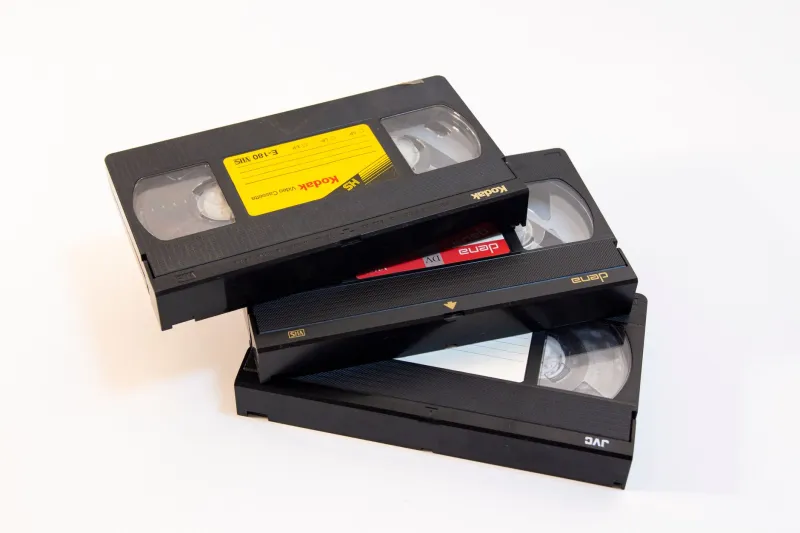
Picture a Tuesday morning in 2005. A Blockbuster assistant manager named Karen rolls a flatbed cart through the drama section, pulling titles off the shelves by the armful. Not because customers are clamoring for them. Because the store is closing in two weeks and corporate wants everything gone. The tapes get tossed into cardboard boxes, priced at a dollar each, and set up near the front door. Whatever doesn't sell by Friday goes into a dumpster behind the strip mall.
This scene, repeated thousands of times across the United States over roughly a decade, quietly erased one of the largest physical media libraries the country had ever assembled. At the peak of the rental era, Blockbuster alone operated more than 9,000 stores. Independent shops numbered in the tens of thousands. Each location held anywhere from a few hundred to several thousand VHS titles. Do the math and you're looking at an almost incomprehensible volume of plastic and magnetic tape — much of it carrying films that existed in no other accessible format.
So where did it all go?
The Dumpster Problem Nobody Wants to Talk About
The honest answer, according to former store managers who lived through the closures, is that a significant portion of those tapes ended up in landfills. Not because anyone wanted that outcome, but because the economics of the collapse left no better option.
"We had maybe three weeks to clear out the building," says a former district manager for a regional chain that operated across the Southeast. "Corporate wasn't paying for shipping to a warehouse. Donation centers were already overwhelmed. We sold what we could and tossed the rest. It was brutal."
VHS tapes aren't biodegradable. The polypropylene shell and polyester film base can persist in a landfill for hundreds of years. Environmental concerns aside, the cultural loss is staggering. Many of the tapes being discarded were rental-exclusive transfers — slightly different cuts, alternate language dubs, or bonus content that was never replicated on DVD. Some were the last surviving copies of low-budget films that never made the digital transition. They went into the trash without anyone ever cataloging what was lost.
Archivists at smaller regional film preservation organizations have been piecing together that story ever since. "We know there are titles that exist now only because a collector happened to be at the right dumpster at the right time," says one independent archivist based in the Midwest who asked not to be named. "That's not a preservation strategy. That's just luck."
Thrift Stores as Accidental Archives
For every tape that went straight to the landfill, another one ended up at a Goodwill, a Salvation Army, or a locally run thrift shop. This second wave of dispersal created something unexpected: a distributed, chaotic, entirely unintentional archive spread across thousands of donation centers nationwide.
Thrift store owners who remember the mid-2000s VHS flood describe it as both a blessing and a logistical nightmare. "We had people dropping off boxes of fifty tapes at a time," recalls the owner of a church-run resale shop in rural Ohio. "We'd price them at fifty cents and they'd sit there for months. Eventually we'd box them up and send them to the warehouse or just toss them ourselves."
But within those chaotic donations were genuine rarities. Collectors who made the thrift store circuit a regular habit during this period tell stories of pulling obscure horror titles, foreign films with handwritten labels, and tapes still in their original rental cases with the store's sticker inventory still attached. Those stickers, it turns out, are now considered historical artifacts in their own right — tiny paper records of a distribution system that no longer exists.
The thrift store pipeline also meant that tapes moved unpredictably across the country. A tape from a closed Blockbuster in Phoenix might end up donated, re-donated, and eventually purchased by a collector in Vermont. The geographic scatter made systematic preservation nearly impossible, but it also meant the collection didn't disappear entirely.
Shipped Overseas: The International Chapter
One of the least-discussed chapters in the VHS dispersal story involves international donation programs. In the early-to-mid 2000s, several nonprofit organizations facilitated the shipping of surplus American media — books, CDs, and yes, VHS tapes — to communities in Central America, sub-Saharan Africa, and Southeast Asia where home video technology was still relevant and accessible.
For some of these communities, the flood of American rental tapes represented genuine cultural access. For film preservationists, it created a strange new geography of survival. There are documented cases of researchers tracking down specific VHS titles that had vanished from the American market, only to locate surviving copies in community centers in Guatemala or school libraries in rural Kenya.
"The tape doesn't know it's supposed to be gone," says one collector who has spent years corresponding with overseas contacts to track down specific titles. "It just goes where it goes. Some of the best-preserved rental copies I've ever seen came from collections in countries where people actually kept taking care of them."
What the Collectors Saved
And then there were the people who saw the collapse coming and treated it as a rescue mission.
In the final years of the rental era, a loose network of collectors, horror enthusiasts, and home video obsessives began systematically buying up tapes from closing stores. They weren't just grabbing obvious titles. They were hunting for the obscure, the weird, and the out-of-print — the stuff that had no DVD equivalent and no streaming future.
Some of these collectors operated with genuine archival intent, carefully cataloging what they acquired and storing tapes in climate-controlled conditions. Others were driven by passion rather than methodology, filling storage units and spare bedrooms with thousands of tapes they hoped to eventually sort through. Either way, they absorbed a portion of what would otherwise have been lost.
The broader collecting community has since built something resembling an informal preservation network — trading lists, digitization cooperatives, and online databases where members log titles they own and flag ones they're searching for. It's imperfect and underfunded, but it exists because a group of people decided that these tapes were worth saving when nobody else was paying attention.
The Reckoning We're Still Having
The great rental tape dispersal is still ongoing in slow motion. Tapes continue to surface at estate sales, flea markets, and storage unit auctions. Occasionally a collection turns up that includes something genuinely irreplaceable — a regional film, a local television broadcast, a documentary that never got a second life in the digital era.
But the window is closing. VHS tape degrades. The oxide layer that holds the magnetic signal breaks down over time, and a tape that survived the closures of the 2000s in a cardboard box may not survive another decade in an attic. The tapes that weren't lost to the landfill are now racing against chemistry.
For anyone who grew up in the rental era, the collapse of that world happened fast enough that it didn't fully register as a loss until it was already complete. The shelves were just there, and then they weren't. The tapes were just there, and then they were in boxes, and then in dumpsters, and then in the ground.
What we're left with is whatever the collectors saved, whatever the thrift stores held onto long enough for someone to find, and whatever traveled far enough from home to outlast the era that created it. It's more than nothing. It's less than what we had. And it's a reminder that preservation doesn't happen automatically — it happens because someone decided it was worth the trouble.