Nobody Skipped Ahead in 1988: What We Lost When Watching Got Frictionless
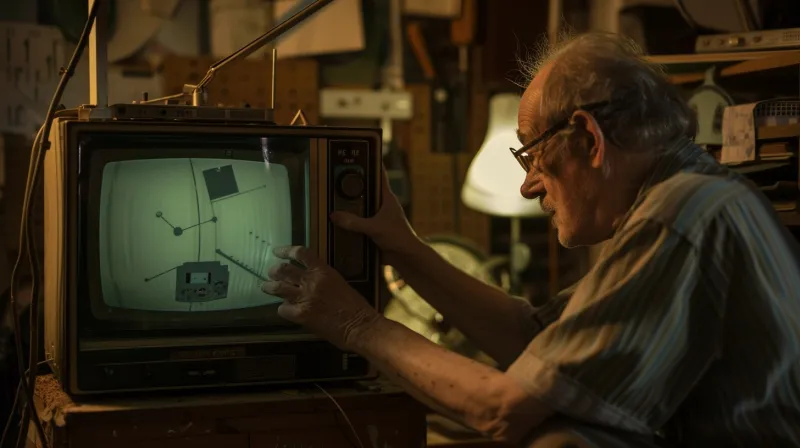
Photo: person adjusting VCR tracking dial vintage television watching movie, via images.stockcake.com
Last month I watched The Untouchables the way God and Paramount intended: on a tape, on a tube TV, with a tracking dial I had to adjust twice and a rewind I had to earn. Runtime: two hours and thirteen minutes, plus the previews the previous owner never taped over. It was, I'll argue, a better viewing experience than the same film has ever given me on a streaming app. Let me explain before you close the tab.
The Machine Had Opinions
A VCR was not a neutral window. It was a machine with moods, and you negotiated with it. Tracking drifts, and you drift it back. The tape stretches near the end of a rental that's been through forty hands, and the picture shivers like it's cold. You don't fix these problems with a settings menu; you fix them with your thumb on a button, in real time, while the movie keeps going.
That sounds like a flaw. It's actually the point. The friction forced presence. You couldn't check your phone, because your phone was a landline in the kitchen, but more importantly because the movie required tending. Watching a tape was closer to driving a car with a manual transmission than riding in a self-driving one. You were in it.
Streaming, by contrast, is frictionless by design, and frictionless is a polite word for passive. The interface disappears so completely that the viewing disappears too. Autoplay rolls you into the next episode before you've decided. The skip-intro button trains you to treat the first ninety seconds of anything as an obstacle. The progress bar — that little red sliver of inevitability — turns every film into a countdown instead of an experience.
The Runtime Was the Runtime
Here's a detail young viewers find genuinely alien: on VHS, a movie's length was a physical fact. You could see it — the tape wound tight on one spool, loose on the other. A 95-minute comedy took up visibly less tape than a three-hour epic, and that physicality shaped expectations before the first frame.
You also couldn't easily check the time. No elapsed-minute readout on most decks, no scrubbing to see how much was left. You surrendered to the story's own clock. Filmmakers of the era knew this and paced accordingly — the slow build, the long take, the scene that breathes. Watch a 1988 movie at 1988 speed and you can feel the difference. Nothing is racing. Nothing is optimized. The film trusts you to sit still.
The Remote That Didn't Reach the Couch
The pause button lived on the VCR itself in many households, which meant that if you wanted to freeze a frame, grab a snack, or answer the phone, you got up. This sounds like an inconvenience. It was a rhythm. Movies on tape had natural interruptions built into them, and audiences metabolized them fine. The modern terror of looking away for even a second — the fear of missing a plot point that requires an immediate rewind — is a symptom of the interface, not the storytelling.
And the rewind itself! Be kind, rewind wasn't a slogan about politeness. It was a small ritual of respect for the next stranger in the chain. Ownership of a tape came with obligations to other people. Streaming dissolved the chain, and with it, a tiny thread of community.
Make the Case to Yourself
I'm not suggesting you sell the smart TV and move into a shed with a CRT. I'm suggesting a practice: once a month, watch something on tape, the whole thing, the old way. Find a working VCR — they're not hard to locate, and fixing one up is its own reward. Pick a movie from the era. Let the tracking wander. Sit through the FBI warning with the patience it deserves.
What you'll notice, I promise, is that the movie feels longer in the best sense — more roomy, more deliberate, more attended. The film isn't better than its streaming version. You're better than your streaming self. The tape just gives you permission to be.
Rewind. Revisit. Remember. Turns out those weren't three separate things. The rewind was how you revisited, and the revisiting was how you remembered — the movie, the night, the person on the couch next to you. Some formats carry content. VHS carried attention. It's worth going back for.