Ninety Minutes to Fill: The Quiet Anxiety of the Blank Tape
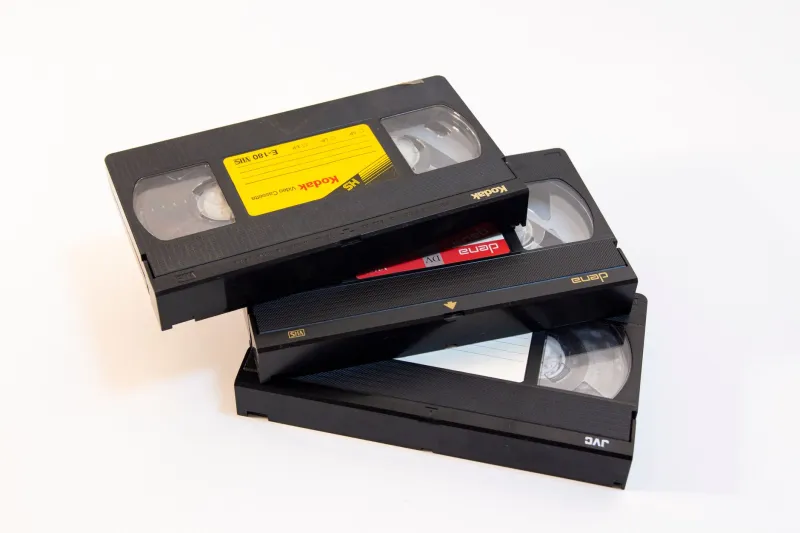
There was a specific kind of stress that doesn't exist anymore. It lived in the electronics aisle of a Kmart or a Walmart, somewhere between the AA batteries and the extension cords, in the section where the blank VHS tapes were stacked in their plastic cases. T-120. Six hours in EP mode, two in SP. You'd stand there longer than made sense, doing math in your head, running through everything you wanted to record in the coming weeks, trying to figure out if you needed two tapes or three.
This was a real decision with real consequences. Tape cost money. Storage space at home was limited. And once you recorded something over something else, that first thing was gone. The blank tape era was defined by scarcity, and that scarcity turned casual media consumption into something that looked a lot more like intention.
The Economics of the Cassette
In the mid-1980s, a blank T-120 cassette ran anywhere from $4 to $8 depending on the brand and where you bought it. Adjusted for inflation, that's somewhere between $11 and $22 in today's money — for a single tape. Maxell, TDK, BASF, Fuji: these brand names carried real weight because the quality difference between a cheap tape and a good one showed up in the picture. You didn't buy the store brand for something you planned to keep.
That price point meant you thought carefully before you hit record. You didn't casually capture everything. You made a case to yourself for why this particular movie, this particular episode, this particular concert special was worth the cost of the media. The blank tape was a budget item. Recording was an investment.
This sounds almost absurdly quaint now, in an era when most people's phones automatically back up every photo they've ever taken to a server they've never seen. But the habit of mind it created — asking whether something was worth keeping before keeping it — was genuinely different from how we relate to media today.
The Label as a Promise to Your Future Self
Once you'd recorded something, you labeled it. This was its own small ceremony.
The label systems people developed for their tape libraries reveal a lot about personality. Some people were meticulous: printed labels, catalog numbers, a three-ring binder with a running index. Others wrote in ballpoint pen directly on the spine, abbreviating titles in ways that made perfect sense in the moment and were completely opaque six months later. A tape labeled 'MOVIES — FALL 91' might contain anything. A tape with a handwritten list of four film titles, each with its start time noted in the margin, belonged to someone who was building an archive they intended to use.
The label was a promise to your future self. It said: I thought this was worth keeping, and I'm telling you exactly what's here so you can find it again. The care people put into that labeling — or the carelessness — tells you something about how seriously they took the library they were building.
The Tyranny of the Remaining Counter
If you grew up recording on VHS, you remember the tape counter. That little numerical display on the VCR that tracked your position on the tape. And you remember the specific anxiety of watching it climb while you were trying to fit one more thing onto a tape that was running out.
The end of a tape was a hard stop. No overflow to a second file, no automatic compression, no cloud backup kicking in. When the tape ran out, the recording stopped, mid-scene if necessary. The number of films that exist in home-recorded collections with their final ten minutes missing because someone miscalculated the remaining space is genuinely staggering.
This created a particular kind of attention. You monitored how much tape you had left the way you monitor a gas gauge on a long drive. You made decisions based on it. Do I record this in SP mode and get better quality but less time, or switch to EP and squeeze another two hours out of it? Do I record this movie at all, knowing I only have forty minutes left and I'll have to cut it off before the end?
These weren't trivial choices. They were the constant low-level negotiation between what you wanted and what you had available. That negotiation shaped what got saved.
What Scarcity Did to Value
Here's the thing about having limited tape: it made you value what you kept.
When you recorded a film, you'd watched it. Or you'd made a deliberate decision to record it unseen based on something — a review, a recommendation, a trailer. Either way, it arrived in your library with context. You knew why it was there. And because it occupied physical space that something else couldn't, you were more likely to actually watch it again. The tape was a commitment.
Compare that to a streaming watchlist, which for most people functions as a kind of aspirational fiction — a list of things you intend to watch someday that grows faster than you can consume it, a collection of titles you added in a moment of interest and will never actually get to. The watchlist costs nothing to add to. The blank tape cost real money and real space.
Scarcity, it turns out, is a surprisingly effective curation mechanism. When you can't keep everything, you keep what matters. And when you keep what matters, you build something that reflects your actual taste rather than your ambient curiosity.
The Tapes That Survived
The blank tapes that people still have — the ones sitting in closets and storage units across the country, labeled in handwriting that might be twenty or thirty years old — are time capsules in the most literal sense. They contain not just the content that was recorded, but the decisions behind it. Someone chose this. Someone thought this was worth the cost of the tape and the space on the shelf.
That's why, when you play back an old recorded tape and find a forgotten movie followed by a Saturday Night Live episode followed by a World Series game followed by someone's birthday footage that accidentally got recorded over the end of something else — you're not just watching old content. You're reading someone's priorities. Their enthusiasms. The specific, unrepeatable shape of what they thought was worth keeping.
No algorithm generates that. No streaming service preserves it. It lives on tape, and only on tape, and the clocks on those tapes are running.