Grain on Purpose: The Indie Filmmakers Choosing VHS Over Everything Digital
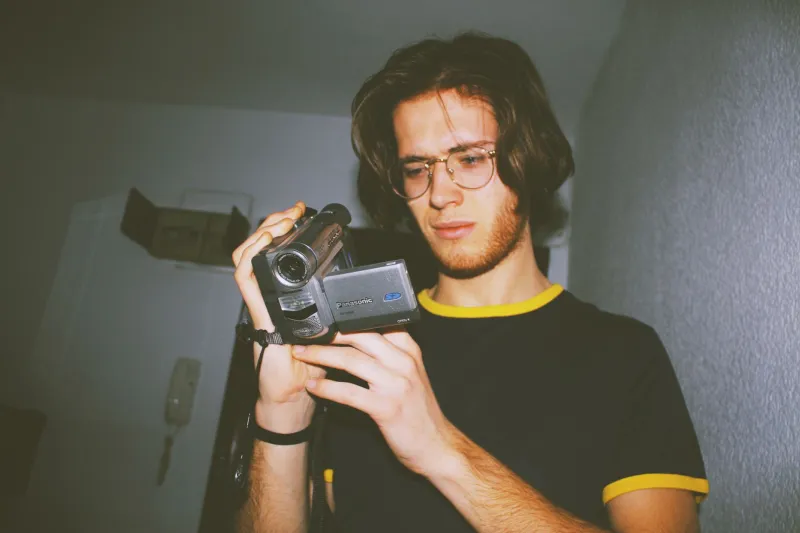
There's a certain kind of filmmaker who, given access to a modern mirrorless camera capable of shooting in stunning 6K resolution, will instead reach for a beat-up Panasonic camcorder from 1991. Not because they can't afford better. Not because they don't know better. But because better isn't really the point.
In 2024, a quietly growing movement of indie directors, musicians, and visual artists across the US are deliberately choosing VHS as their primary recording medium. And the reasons go a lot deeper than chasing a trendy look.
The Aesthetic Isn't the Whole Story
Ask most people why anyone would shoot on VHS today, and they'll assume it's purely about the visual texture — the soft edges, the color bleeding, the analog noise that digital filters have spent decades trying to convincingly fake. And sure, that's part of it. But spend any time talking to the filmmakers actually doing this, and you realize the aesthetic is almost secondary.
For a lot of these creators, VHS represents a specific relationship with the act of recording itself. Digital filmmaking — especially with modern tools — creates an almost infinite safety net. You can shoot for hours. You can fix it in post. You can run the footage through seventeen different color grades until it looks exactly the way you imagined it. VHS doesn't let you do any of that, and that constraint turns out to be creatively liberating in ways that are hard to explain until you've felt it.
Tape is finite. Tape degrades. Tape captures the moment and moves on. There's something about that irreversibility that forces a different kind of attention on set.
A Pushback Against Algorithmic Perfection
It's worth understanding the cultural moment these filmmakers are reacting against. Streaming platforms and social media have spent years training audiences — and by extension, creators — to expect a very specific kind of visual and narrative polish. Algorithms reward content that hits familiar beats, looks a certain way, and fits neatly into predefined categories. The result, a lot of indie artists will tell you, is a creative landscape that can feel suffocating.
VHS, weirdly, is a form of resistance. The format is fundamentally incompatible with that kind of algorithmic optimization. You can't A/B test a VHS tape. You can't tweak the color profile after the fact based on audience retention data. What you shoot is what you get, and what you get is something that looks and feels like it came from a human being rather than a content pipeline.
There's also something politically charged about the choice for some creators. Rejecting high-resolution digital production is, in a small but meaningful way, a rejection of the infrastructure that surrounds it — the cloud storage, the subscription software, the endless upgrade cycle. VHS gear is cheap, widely available at thrift stores and garage sales across the country, and requires no ongoing subscription to anything.
The Practical Reality of Shooting on Tape
Of course, choosing VHS isn't without its headaches. Finding functioning camcorders in good condition takes patience and a little bit of luck. Tapes themselves are getting harder to source in bulk, though a few specialty suppliers have stepped up to fill the gap. And the workflow for getting VHS footage into a digital editing environment — which most filmmakers still use for the final cut — involves a capture setup that can range from charmingly janky to genuinely frustrating.
Then there's the learning curve of actually working within the format's limitations. VHS handles low light poorly. Fast motion can blur in ways that look unintentional rather than stylistic. The aspect ratio and resolution create compositional challenges that filmmakers trained entirely on digital have to consciously adapt to.
But here's the thing: most of the creators doing this will tell you those limitations are exactly the point. Learning to work with the format rather than against it changes how you think about every shot. You become more deliberate. More committed. You start asking whether a shot is actually necessary before you roll tape, because rolling tape means spending something real.
Music Videos and Short Film: Where VHS Is Thriving
The format has found particularly fertile ground in the music video world. Independent musicians — especially in the lo-fi, punk, folk, and experimental spaces — have embraced VHS as a way to give their visual content a handmade authenticity that matches the feel of the music itself. A shaky, warm, slightly washed-out VHS music video communicates something about the artist's values and aesthetic priorities before a single note plays.
Short filmmakers have been equally drawn to the format. The compressed runtime of a short film actually pairs well with VHS limitations — you're not fighting the format across a ninety-minute narrative, you're working within it for ten or fifteen minutes. Some of the most interesting short work being made right now has that unmistakable tape texture running through it, and it doesn't feel like a gimmick. It feels like a choice.
Film festivals have started to take notice, too. A handful of smaller, independent festivals around the country have introduced VHS or analog-specific screening categories, recognizing that this isn't just a technical novelty but a legitimate creative movement with its own logic and community.
What This Means for the Tape Community
For those of us who've been collecting, preserving, and celebrating VHS culture for years, this new wave of intentional tape production is genuinely exciting — and a little complicated. On one hand, it validates everything we've always known about the format's unique power. On the other hand, increased demand for working camcorders and blank tape stock puts pressure on a supply chain that wasn't exactly robust to begin with.
What it does, more than anything, is remind us that VHS was never just a delivery mechanism for someone else's content. It was always also a tool for making things. The home video revolution that put camcorders in American living rooms in the 1980s was, at its core, about democratizing production — giving ordinary people the means to record their lives, their ideas, their stories.
The indie filmmakers picking up VHS in 2024 are, in a real sense, the inheritors of that tradition. They're not just rewinding a tape. They're rewinding an idea about what it means to make something real.
And honestly? We're here for every grainy, imperfect, deliberately human frame of it.