The Basement Box Inventory: A Field Guide to the Tapes You Own and Have Never Played
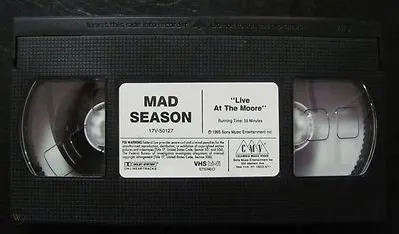
Photo: SMV Enterprises, Public domain, via Wikimedia Commons
Every household that owned a VCR ended up with the same box. It moved house at least twice. It is probably in a basement or a closet shelf behind something heavier. And nobody has played a single tape in it since roughly the second Bush administration.
That box is not junk, and it is also not safe. It is a stack of chemical time bombs with a family history inside, and the difference between the two outcomes is usually a decision somebody makes in a given year — or doesn't.
Category One: The Wedding Tapes
Every family has them, and they are almost always the highest-value item in the box. Raw camcorder footage of a ceremony, a reception, a first dance shot from an angle that reveals the videographer was standing next to the cake table.
These tapes are worth digitizing first, for a simple reason: the events they document cannot be re-shot, and the people in them are the ones most likely to be missing from later footage. Prioritize anything with a deceased family member or a marriage that has since ended. Do the audio check early — wedding tapes often have the worst sound of anything in the box, because the built-in mic was pointed at a wall or a speaker stack.
Category Two: The Off-Air Marathon
Somebody set the timer for a holiday movie marathon and forgot to stop it. The result is a six-hour tape containing three movies, four commercial blocks, a weather crawl, and possibly the local news in the middle.
The content is usually replaceable. The commercials are not. Ad breaks from a specific market and a specific year are surprisingly valuable to researchers and to people who just want to see the car dealership that used to run during every single break. Before you tape over one of these, check what's in the commercial blocks.
Category Three: The Instructional Tape
Golf swings. Step aerobics. A cooking demonstration hosted by a man in a very large shirt. A timeshare presentation that somebody sat through for a free weekend.
Low priority for preservation, high priority for a laugh. But scan them anyway, because instructional tapes occasionally contain something unexpected — a local business spotlight, a school fundraiser, a family member appearing as an extra in a corporate video. The odds are low. The scan takes twenty minutes.
Category Four: The Unlabeled Blank
This is where the box gets interesting. A tape with no label, no case, and no history is either nothing or everything. Maybe it is an episode of a sitcom taped off-air in 1989. Maybe it is the only footage of a grandparent who died the following spring.
Do not fast-forward through these to peek. Fast-forwarding stresses the tape, and it also skips past the ten seconds you actually needed. Instead, play at normal speed with the counter visible, note timestamps, and log what you find. If a tape smells like vinegar or sheds white powder, stop and isolate it before it touches a machine again.
Category Five: The Just-in-Case Duplicate
Two copies of the same movie, one of which was taped off a rental and looks like it was recorded through a screen door. These are the easiest tapes to let go of, and they are also the ones people feel weirdest about tossing.
Here is the permission slip: if a tape is a low-quality dub of a commercially available film, and the original commercial release is widely available in better condition, the tape is not an archive. It is a backup that failed. Recycle it.
Category Six: The Recital and the Little League Game
School plays, dance recitals, youth sports, church pageants, a graduation shot from the back of a gymnasium. Shot on a camcorder, framed badly, lit worse, and absolutely irreplaceable.
These go near the top of the queue, right behind weddings. Nobody else will ever preserve them, and the camera angles are the only record of the day. Expect them to look rough on modern screens — camcorder tape from the eighties and nineties has less resolution than people remember, and upscaling will not add detail that was never captured.
Category Seven: The Mystery Tape From Somewhere Else
Thrift store finds, tapes inherited from a neighbor, a box somebody left at a house after a move. These are the ones with no family claim and occasional archival value — a local broadcast, a home movie from a town you have never visited, a band practice in a basement.
If you find one and cannot identify anyone in it, consider donating a digital copy to a community archive or a lost media group rather than letting it rot. Somebody out there may be looking for exactly that tape.
What to Digitize First
The order is not about picture quality. It is about irreplaceability and condition.
- Tapes with visible or smellable deterioration. Vinegar odor, white residue, sticky feel, wrinkled ribbon. These are on a clock and may need a specialist rather than a home deck.
- Only copies of family events. Weddings, funerals, births, recitals.
- Any tape featuring someone who has died. Sentimental and genealogical value in one package.
- Off-air recordings with local content. Commercials, station IDs, local news, regional programming.
- Everything else, in whatever order you can tolerate.
The Rule That Actually Matters
A tape on a shelf is a tape in the middle of a slow chemical event. Keeping it is a decision to preserve the object. Saving it is a decision to preserve the content, and those are not the same thing.
Play each tape once, well. Capture it. Store the file in two places, with one of them somewhere other than your house. Label the digital file with a plain description and a year, because the person who inherits it will not know who is in that graduation footage unless you write it down.
Then put the original back in a cool, dry box and let it rest. You did the thing. The box can be a box again.